
Good fried chicken is a process-control problem disguised as comfort food. The biggest improvements usually come from consistent cut size, measured seasoning, coating discipline, manageable batches and a thermometer.
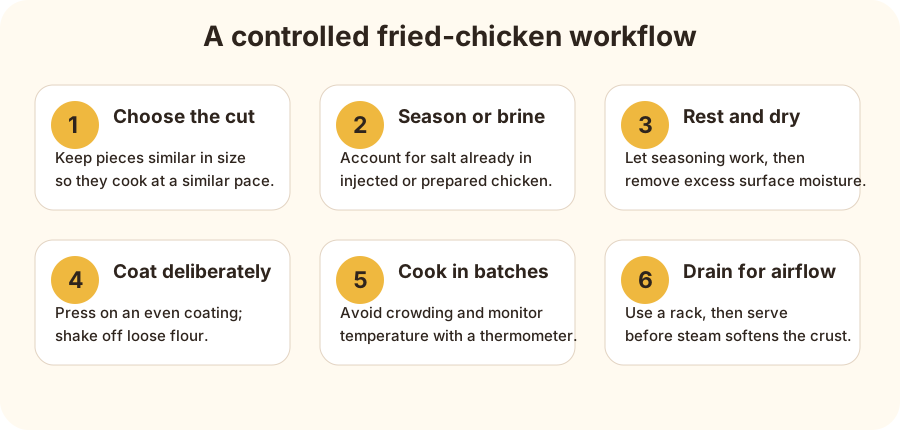
1. Keep pieces reasonably consistent
A mixed bone-in batch has different shapes and cooking rates. Separate very large breasts, small wings and dense thighs when practical. For boneless pieces, cut to similar thickness. Consistency reduces the temptation to keep every piece in the oil until the slowest one is done.
2. Season with the chicken’s starting condition in mind
Some packaged chicken is injected or enhanced with a salt solution. Read the label before adding a strong brine. Dry seasoning gives direct control; cultured dairy can add tang and help flour adhere; a wet brine seasons throughout but can make oversalting easier. Keep raw poultry refrigerated while it rests.
3. Choose one coating architecture
A simple seasoned-flour dredge produces a familiar crust. A small amount of starch can make it lighter and more brittle. Drizzling a little wet mixture into the flour creates craggy flakes. A true batter behaves differently and should not be treated as flour dredge with extra liquid. Press the coating on, then shake off loose flour that would burn in the oil.
4. Use manageable batches
Crowding causes a large temperature drop and makes pieces collide. Use a stable cooking vessel, leave headroom above the oil and never add wet or icy chicken to hot oil. Monitor the oil and the chicken rather than relying only on a timer. Official US food-safety guidance lists 165°F (74°C) as the safe minimum internal temperature for poultry.
5. Drain for airflow
A rack lets steam escape from both sides. Paper towels can trap steam against the bottom crust. Season immediately only when the finishing seasoning needs surface oil to adhere. Serve promptly; holding time is an enemy of crunch.
Troubleshooting
| Problem | Likely cause | Next change |
|---|---|---|
| Coating falls off | Wet surface, loose flour or rough handling | Dry more carefully, press coating on, rest briefly |
| Dark outside, underdone centre | Pieces too thick or oil too hot | Use smaller pieces, reduce heat, verify with thermometer |
| Greasy crust | Oil temperature fell and did not recover | Smaller batches; preheat fully between batches |
| Bland meat | Seasoning concentrated only in flour | Season or brine the chicken itself |
| Soggy after boxing | Steam trapped during holding | Use vented packaging and shorter hold time |